Global Experiences:
Global Campus Activities


Baraza: Morphine is Everything: Examining Pain and Palliative Care Practices in Tanzanian Hospitals
10/13/2023
Center for African Studies Carter Conference
3/27-3/28/2025
One of my most memorable experiences was attending a Baraza talk in October 2023, where Dr. Cogburn presented her research on pain care practices and morphine distribution in rural Tanzania. At the time, I was already developing my interest in East African healthcare, and this talk arrived at exactly the right moment. What struck me most was a discussion about the structural adjustment period initiated by the IMF and World Bank and how its effects continue to shape Tanzania's healthcare economy today, a connection I did not fully understand before this event and reading additional literature. This single conversation changed the way I thought about my own research, which was a part of Dr. Strong's multi-year pain care project. It also ignited a habit: from that point forward, I made it a priority to attend Barazas and similar talks even when the topic wasn't directly tied to my own work, because I had learned how unexpectedly relevant any research could be.
The 40th Gwendolen M. Carter Conference, held in March 2025, reinforced my desire to attend as many culturally sound events as possible. The theme "Knowledge Production and African Intellectual Histories" resonated deeply with questions I had been wrestling with as both a researcher and a pre-medical student: who produces knowledge, under what conditions, and whose experiences shape what we understand as truth? The panel on "Drugs, Knowledge, and Biomedicine" was particularly compelling. Dr. Wendland's discussion of medical knowledge production in Malawi, drawn from the first ethnography of a medical school in the global South, gave me a new framework for thinking about healthcare systems. In other words, not just as clinical institutions, but as products of historical and socio-political forces. As someone preparing for a career in medicine, this perspective challenged me to think more critically about the systems I hope to enter.
Remembering Rwanda
9/30/24
Attending the "Remembering Rwanda" event in September 2024 was perhaps the most emotionally profound experience of my time at UF. While my African Studies coursework had introduced me to the 1994 genocide against the Tutsi, nothing had prepared me for hearing a first-hand account from survivor Consolee Nishimwe. It is one thing to read about atrocities in an academic text; it is another to sit in a room with someone who lived through them. This experience reminded me that history is not abstract, it belongs to real people. What also surprised me was the range of researchers who followed, including a professor of veterinary medicine whose work on cattle disease connects directly to the health and livelihoods of Rwandan communities. I had never imagined that field having anything to do with a genocide's aftermath, and yet the connection was undeniable. It opened my mind to the many unexpected ways research can address human suffering, and it expanded my sense of what it means to contribute to a better world. This event allowed me to take knowledge learned in the classroom and apply it.

Afriganza
2/17/26
Afriganza, an event previously mentioned in the skills section, is one that I helped conceptualize as a CAS Ambassador and it brought all of these experiences full circle. My motivation was straightforward: I wanted other students to feel the same excitement about African history, culture, and language that I had developed over four years. By designing an interactive, marketplace-style event with regional tables featuring cultural activities, language lessons, and connections to CAS coursework, we created something genuinely communal.
Planning the event was characterized by people across the Center coming together to combine their knowledge about different African countries and the corresponding cultures. For instance, student ambassadors enrolled in specific language courses helped to create language activities. The ones who have travelled to different countries brought different souvenirs and cultural pieces. We all worked together to promote the event by creating social media graphics, hanging flyers, and speaking in classrooms. The event came together to be lively and exactly as intended, a busy marketplace. Each table had a graphic highlighting countries in the region, historical/cultural facts, a cultural item, and an activity. For instance, for Central Africa the activity was to add to a mosaic of the African continent whereas South Africa’s activity was jewelry making with beads. We also had a Senegalese tea ceremony, student performances, a choir, different types of Ethiopian coffee, and kitange fabrics for a fashion show. Each student who checked in had the opportunity to receive a “passport”, a stamp from every region, and then receive pizza and prizes.
What I did not anticipate was how much I would learn myself, such as learning a traditional Malaasy dance from Madagascar, tasting Ethiopian coffee, and speaking with African graduate students whose perspectives broadened my own. Seeing students interested in Swahili, knowing that this event might be the spark that leads them to enroll in a language course or pursue a study abroad experience, was deeply rewarding. Considering this was the first year of the event, it also offers the opportunity for more creative ideas and expanding it to be even larger in future years. This includes having more tables as we did not have Northern African countries represented, for instance. This collaborative experience affirmed my belief that curiosity about the world is contagious and that creating space for it is one of the most meaningful things a student leader can do.
Lanugage Learning

Swahili Courses
08/2022- 04/2025
I did not grow up in a multilingual household, and language learning never came naturally to me. When I enrolled in Beginning Swahili 1 at UF, I had no way of knowing that this single decision would become one of the most challenging and transformative commitments of my undergraduate career.Over three years, I progressed from Beginning Swahili 1 all the way through Advanced Swahili 2. This was a journey that tested my patience, humbled me regularly, and ultimately reshaped the way I engage with the world. Unlike large language courses where it is easy to blend into the background, my Swahili classes were intimate, sometimes as small as three students. There was nowhere to hide, and that accountability pushed me to show up fully even on the days I felt like I wasn't making progress. Language learning, I discovered, is less about talent and more about perseverance. It is about continuing to return to something difficult because you believe in where it's taking you.
Beyond grammar and vocabulary, these courses immersed me in East African history and culture in ways I hadn't anticipated. I learned how Swahili itself carries centuries of history, shaped by Bantu, Arabic, Persian, and colonial influences, and how its dialects shift across borders, carrying different cultural weight in Kenya versus Tanzania. Language, I came to understand, is never just a communication tool. It is a lens through which people understand the world around them. Studying Swahili gave me access to that lens, and everything I read and learned about East Africa afterward felt richer and more layered because of it.
That understanding became tangible during my ten weeks of fieldwork in Iringa, Tanzania. Outside of a small number of doctors, most people I encountered spoke only Swahili and their ethnic language, such as Kihehe. Conducting my interviews in Swahili rather than working through a translator changed the entire dynamic of my research. People opened up differently. I could pick up on cultural nuances, follow the natural rhythm of a conversation, and respond in the moment rather than waiting for words to pass through an intermediary. What Swahili gave me in Tanzania was not just comprehension, it was trust, and with trust came the kind of honest, personal connection that makes research meaningful.
Looking back, my Swahili journey taught me something I carry into every area of my life: that discomfort is not a sign to stop, but a sign that growth is happening. I began as a student who struggled with language learning and ended as a researcher whose work was made possible because I didn't give up on it.
International Coursework


Overview
08/2022-04/2026
My anthropology major and African Studies minor led me through a curriculum that was, in the truest sense, globally oriented. Courses like Culture & Medicine, Hospital Ethnography, Global Public Health, Anthropology of Modern Africa, African Politics, Gender & Sexuality in African History, and Anthropology in Tanzania, among others, collectively built the intellectual foundation I carried into my research and fieldwork. Rather than existing in isolation, these courses formed a continuous conversation, each one deepening the questions raised by the last, and all of them shaping the way I understand health, history, identity, and power across the world. Three courses stand out as particularly transformative.
Africa in World History
Dr. PhilipJanzen
Africa in World History dismantled assumptions I didn't even know I held. Growing up, my exposure to African history was limited almost entirely to colonialism and its aftermath, a framing that, I came to understand, is itself a distortion. Learning about the depth and sophistication of pre-colonial African societies reoriented my entire understanding of the continent. One moment that has never left me was learning about the assassination of Patrice Lumumba, the leader of the Democratic Republic of Congo's independence movement. The direct involvement of the U.S. government and Belgian officials in his death is not a story that makes it into most history curricula, and confronting it forced me to think critically about whose narratives get told, who benefits from silence, and how those silences shape the global order we live in today. This course made me a more honest thinker.

Women & Politics in Africa
Dr. Agness Leslie
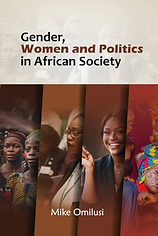
Women & Politics in Africa expanded the way I understand both politics and gender, not as abstract concepts, but as forces that shape real lives in real places. Learning that Rwanda has one of the world's first women-majority parliaments was striking on its own, but understanding it within the context of Rwanda's history, such as the genocide and currently administration controversies, made it even more profound. It raised questions I still sit with about how tragedy can create unexpected openings for transformation, and what political representation actually means for the lives of ordinary women. This course directly deepened the gender lens I brought to my own research in Tanzania, where the intersection of gender, age, and caregiving shaped patient experiences in ways I might otherwise have missed.
African Cultures & Literatures
Dr. Rose Lugano
African Cultures & Literatures offered something different: an entry point into African intellectual and creative life through literature. As someone who loves historical fiction, this course was both personally enjoyable and intellectually stretching. Engaging with African writers on their own terms, rather than as subjects of Western academic analysis, shifted something in me. I learned to ask different questions of a text: not just what is being said, but who is saying it, from what position, and for whom. One book that we read that broadened my understanding of literature was Things Fall Apart by Chinua Achebe. This foundational African novel, challenged colonial stereotypes by portraying a complex, functioning pre-colonial society and led me to read similar narratives, long after the class ended. The skill of contextualizing literary pieces has proven remarkably transferable, shaping the way I read academic papers, analyze research, and even listen to the people I interview.
Research

Reach Project in Tanzania
Summer of 2024
The summer of 2024 brought me to Iringa, Tanzania for ten weeks and it was the most formative experience of my undergraduate career. My project, situated within Dr. Strong's broader multi-year pain care initiative, focused on understanding how age shapes pain care practices at Tosamaganga District Hospital in rural Tanzania. What began as an academic inquiry quickly became something far more personal. I arrived with a research plan, interview questions, and a methodological framework. What I found challenged nearly every assumption I had brought with me.
My findings confirm that pain cannot be understood as a purely physical experience. Instead, it must be conceptualized as a deeply relational and embodied phenomenon, one that emerges through the relationships between bodies and environments, individuals and communities, and patients and healthcare systems. The elders I spoke with described pain that was emotional, spiritual, financial, and social, not just physical. These dimensions were inseparable from one another, and recognizing that changed the way I think about healthcare entirely.
Several findings struck me in ways I didn't anticipate. Loneliness emerged as one of the most significant forms of pain among elderly patients. With a growing number of Tanzanian elders living alone, the absence of community and family connection was not a peripheral concern, it was central to their experience of illness and recovery. I also found that "home" was understood less as a physical place and more as an emotional concept deeply tied to identity, health, and belonging. These are not ideas I found in a textbook; they were told to me by people who lived them, and sitting with those conversations reshaped my understanding of what it means to care for someone.
My research also contributed to existing literature on "medical improvisation" or the remarkable adaptability healthcare providers demonstrate in low-resource settings. Witnessing this firsthand gave me a profound respect for the ingenuity required to deliver care under constraint, and it raised questions I continue to carry about how global health systems can better support providers working in these conditions. One of the most meaningful dimensions of this project was understanding the role of caregivers in Tanzanian healthcare. Family members are not peripheral to a patient's hospital experience, they are essential to it, assisting with feeding, dressing, picking up medications, and providing the kind of presence that the healthcare system alone cannot. The way caregiving status was perceived by hospital staff also shaped how elders were treated, adding another layer of complexity to the relational dynamics I was documenting.
This project was not without its challenges. When my planned rank-ordering methodology could not be implemented as designed, I had to think critically and adapt in real time, an experience that taught me as much about research as any methodology course ever could. Conducting interviews in Swahili, navigating cultural nuances, and building trust with participants in a context far from my own pushed me to grow in ways I had not expected. More than anything, this research deepened my commitment to pursuing medicine with both clinical rigor and cultural humility. It confirmed that understanding a patient's pain requires understanding their world and that doing so is not optional, but essential.
More information about this project, including weekly reflections and background, can be found in the research tab.